

Product Overview
THE BRIDAL SILHOUETTE EDIT
A Waistline with Presence
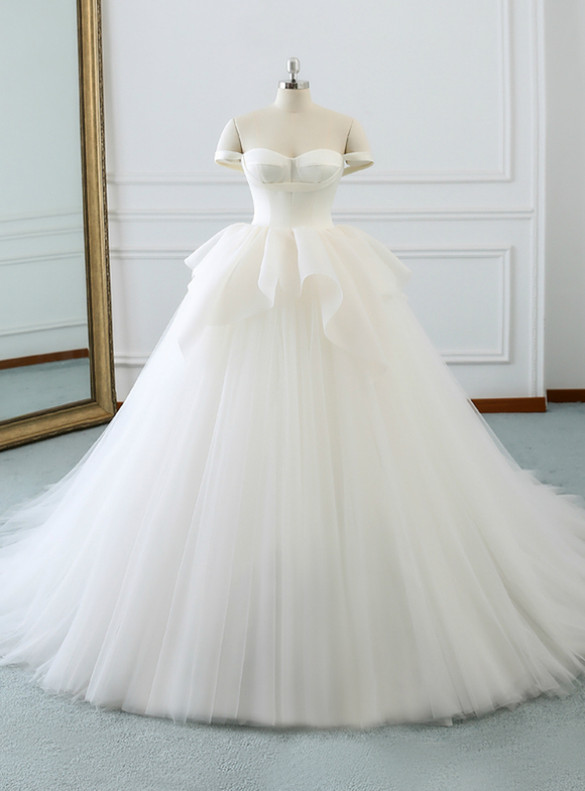
Off-shoulder softness meets a defined Basque waist and the generous sweep of a full tulle skirt.

THE SHAPE
A Defined Centre
The Basque waist draws the eye down from the fitted bodice into a pointed waistline, giving the upper silhouette a more sculpted outline. Below it, the full skirt opens into soft volume, creating a pronounced contrast between the waist and the hem.
NECKLINE & FIT
The Off-Shoulder Frame
The neckline sits across the upper arms to leave the shoulders and collarbone visible. Its proportions work particularly well with an updo, a low bun or softly gathered hair, keeping the neckline in view.
FABRIC CONTRAST
Satin Above, Tulle Below
The product description identifies a satin bodice paired with a tulle skirt. This contrast gives the waist a more defined visual finish while allowing the skirt to retain its airy, layered appearance.
ANOTHER ANGLE
Details Beyond the Front

A lace-up back allows the bodice fit to be adjusted through the lacing. The finished fit should feel secure around the torso without pulling the neckline out of position.
THE FITTING ROOM
A Few Details Worth Planning
For an off-shoulder gown, check the neckline while sitting, reaching forward and raising your arms gently. The bodice should stay comfortably anchored. When arranging alterations, bring the shoes you plan to wear so the floor-length hem can be assessed at the correct height.
Complete the Look
Veil
A fingertip or chapel-length veil can complement the full skirt without competing with the neckline.
Jewellery
Small drop earrings or a delicate bracelet keep attention on the exposed neckline.
Shoes
Choose the heel height before the final hem fitting to preserve the intended floor-length proportion.
EXPLORE THE BRIDAL EDIT
BEFORE YOU ORDER
Fitting & Ordering Notes
How can I stop an off-shoulder wedding dress from slipping?
The bodice fit is the starting point. Measurements across the bust, waist and upper torso should be accurate, and the neckline should be tested with natural arm movement during fitting. A bridal seamstress can assess whether the bodice needs adjustment or discreet internal support.
Does the built-in bra provide enough support for a fuller bust?
The listing confirms a built-in bra, but support depends on individual proportions and the fit of the bodice. Brides with a fuller bust should provide accurate bust and underbust measurements and ask whether additional cup or internal support adjustments are suitable before ordering.
Can the Basque waist be altered without changing the shape?
Waist and bodice adjustments need careful handling because the pointed waistline is a defining feature. A seamstress should assess the side seams and waist position together; taking in the waist too aggressively may affect the balance between the bodice and skirt.
Would a petticoat make this ball gown too wide?
A petticoat can add structure and lift, but the best choice depends on the skirt's existing volume and the space available at your venue. Try the dress with the intended petticoat before finalising the hem, especially if you need to move between narrow aisles or smaller reception spaces.
What should I consider when shortening a layered tulle wedding dress?
Layered tulle may require each layer to be checked and finished so the hem hangs evenly. Take the shoes planned for the wedding to the fitting, and ask the seamstress to inspect the skirt's layers before deciding how much length to remove.
How should I choose a veil for an off-shoulder ball gown?
A simple veil is often the easiest way to balance a full skirt and open neckline. Fingertip length gives a lighter finish, while a chapel-length veil creates a more formal aisle look. Keep heavy embellishment away from the neckline if you want the shoulder line to remain the focal point.
How much room should I allow for the lace-up back?
The lacing offers some flexibility in the bodice fit, but it is not a substitute for choosing the correct size. Follow the size chart and provide current measurements; the finished bodice should sit securely without the lacing being pulled excessively tight or the back edges overlapping awkwardly.