

Product Overview
The Shape of Satin
A Waist with Presence
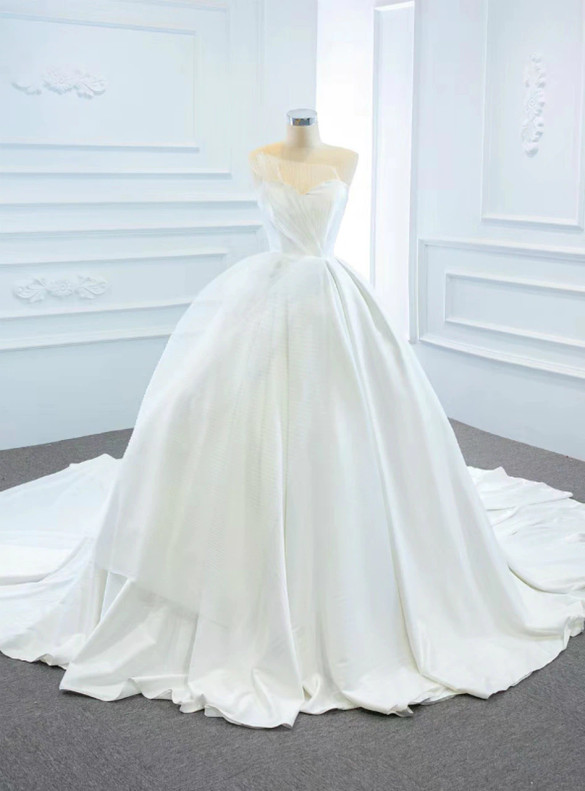
Sculpted through the bodice, defined at the waist and released into a sweeping satin skirt.

The bodice
Corset Precision
The straight strapless neckline is framed by a smooth satin band, keeping the upper edge clean and uninterrupted. Visible corset seaming gives the bodice its tailored character, shaping the torso before the waist draws inward.
Its Basque-inspired waistline forms a defined point below the natural waist, creating a longer visual line through the bodice. That angled transition is the signature detail: it gives the gown a more sculptural profile before the skirt opens into generous volume.

Side perspective
Volume in Motion
The satin skirt falls into broad, controlled folds from the shaped waist. Its full ball gown proportions create a strong outline in photographs, while the rounded cathedral train extends the silhouette behind the bride.
The finishing line
An Open Back
Ribbon lacing crosses the open back, adding a delicate detail to the clean satin surface. The long rounded train brings a formal finish that suits a traditional aisle entrance, a country-house celebration or a grand indoor venue.
Styling the Silhouette
Keep jewellery close to the neckline with refined earrings or a delicate bracelet. For the strapless bodice, choose bridal support that works with the corset construction and open back. A cathedral veil can echo the train's length; a shorter veil creates a sharper contrast against the full satin skirt.
Explore by design detail
Fitting & Care Notes
How should I measure for a Basque waist wedding dress?
Measure your bust, natural waist and hips while wearing the undergarments planned for the wedding. The pointed waistline sits below the natural waist, so follow the garment's size chart carefully and ask the dress team how the waist point is positioned when comparing your measurements with the chart.
How can I keep a strapless satin bodice secure throughout the day?
A secure fit starts with the correct bust and waist measurements. During alterations, ask your seamstress to assess the bodice tension, neckline position and internal support. Repeatedly pulling up the gown can indicate that the fit needs professional adjustment.
Which bridal underwear works with an open-back corset gown?
Traditional bras with a high back may be visible through the open-back design. Low-back support, adhesive cups or another specialist bridal option may be more suitable. Confirm whether the gown includes built-in bust support before purchasing additional underwear.
Can the cathedral train be bustled for the wedding reception?
A bridal seamstress can assess whether a bustle can be added and which method best suits the train's shape and fabric weight. Discuss how much of the train you want lifted and whether the finished bustle will remain comfortable for walking and dancing.
Can a satin ball gown be shortened without changing its shape?
The hem can often be adjusted, but the skirt's volume and train require careful handling. Take your wedding shoes to the fitting and ask the seamstress to check the front hem, side balance and train separately before any cutting begins.
Is the colour closer to pure white or ivory?
The product specification lists the shown colour as ivory, although the product title uses white. Satin can appear warmer or cooler under different lighting, so compare the product photographs with your venue lighting and request colour confirmation if an exact shade match is important.
How much time should I allow for delivery and final alterations in the UK?
The product page lists normal tailoring at 10–18 business days and shipping at 2–8 business days. Allow additional time for fittings, hemming and any bustle alterations. Brides with a fixed wedding date should confirm the current production schedule before placing an order.