

Product Overview
THE SATIN STUDY · COLLECTION 01

Sculpted Satin · Architectural Pleating
Where Satin Meets Movement
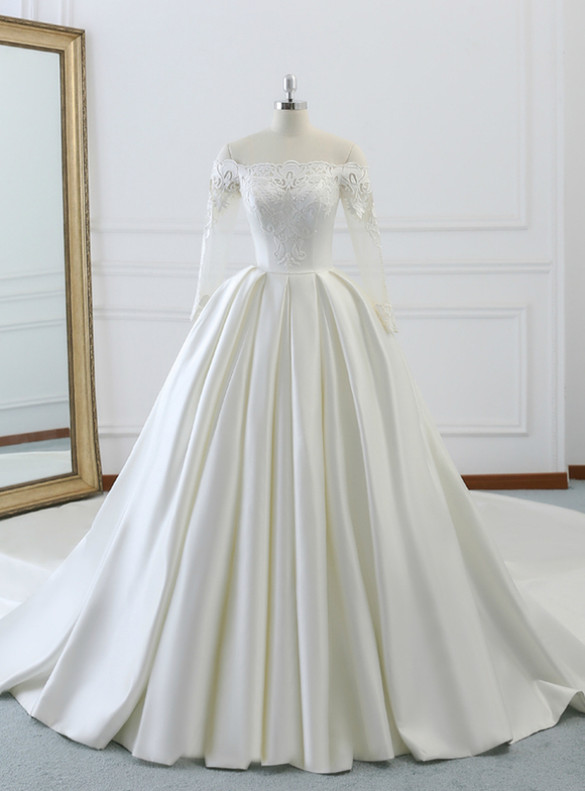
Smooth white satin gives this bridal design a defined, polished character. The fitted corset bodice introduces visible construction lines, while the horizontal waist seam creates a clear transition into the full skirt. Its modern appeal lies in the contrast between a closely shaped upper section and generous fabric movement below.

THE COUTURE PERSPECTIVE
Lines That Shape the Silhouette
Visible seaming gives the bodice its tailored definition. Satin bands introduce a distinctive linear detail, drawing attention towards the waist without relying on elaborate surface decoration.
Box pleats begin at the waist and open into the floor-length skirt. Their controlled folds create volume with a deliberate rhythm, allowing the satin to move with more depth and dimension.
THE FINAL LINE
A Train With Presence
The rounded train extends the skirt beyond the floor-length hem, giving the gown a more dramatic finish from behind. This proportion works particularly well for ceremony entrances and formal bridal portraits. Consider the aisle width, venue flooring and available space for turning when planning the final hem adjustment.
THE EDITOR'S STYLING NOTE
Keep the Finish Considered
Sculptural pearl earrings or a delicate cathedral veil complement the clean satin surface. A low chignon keeps the neckline visible, while classic court shoes provide a practical foundation beneath the long skirt. Minimal jewellery allows the bodice construction and flowing train to remain the focus.
EXPLORE THE BRIDAL COLLECTION
Discover elegant satin wedding gowns
BRIDAL FITTING NOTES
Before Your Wedding Day
How do box pleats affect the fit around the waist and hips?
Box pleats create additional skirt volume from the waist, so the waist measurement and seam placement are important. Alterations should preserve the spacing and direction of the folds to avoid an uneven skirt appearance.
Will the satin finish look different in daylight and indoor wedding photography?
Satin reflects light according to its surface and the surrounding illumination. Window light can reveal softer highlights, while direct flash may produce stronger reflections. Request photographs in both lighting conditions when checking the final appearance.
What should I check when fitting a structured satin bodice?
Check that the bust sits smoothly, the waist seam remains level and the bodice does not wrinkle or pull when sitting or raising your arms. Accurate bust and waist measurements help the seamstress assess the required adjustments.
How much room should I allow for the wedding dress train?
Consider the aisle, ceremony platform and reception floor when deciding on the finished train length. Check whether your venue has a bustle or train-lifting requirement, and discuss practical movement with your seamstress before the final fitting.
Can the waist and skirt be altered independently?
Some waist and hem adjustments can be carried out separately, but the construction needs to be assessed first. Changes around the waist may affect the placement of the box pleats, so use an experienced bridal alterations specialist.
How can I prevent white satin from being damaged before the ceremony?
Store the gown in a breathable garment bag in a clean, dry place. Keep it away from rough surfaces, cosmetics and coloured fabrics that may transfer onto the satin. Arrange professional steaming before the wedding rather than attempting high-temperature ironing at home.