


Product Overview
THE BRIDAL EDIT · SATIN COLLECTION
The Grand Entrance
A sculpted satin bodice, a generous skirt and a bow that leaves its own signature.

01 / THE BODICE
Pleats in Focus
Diagonal satin pleats give the bodice direction and definition. The off-the-shoulder neckline frames the collarbones, while the wide banded straps bring a soft sculptural detail to the upper silhouette.
02 / THE SKIRT
Room for Drama
The full ball gown skirt opens from the waist and falls to a floor-length hem. Its volume gives the dress a formal presence suited to grand entrances, traditional ceremonies and spacious wedding venues.
03 / THE REAR VIEW
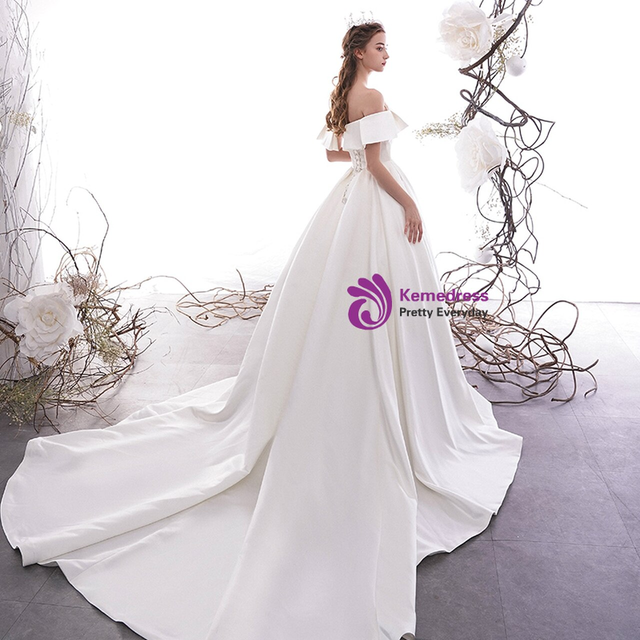
From the back, ribbon lacing and an oversized satin bow create a memorable finish. The train extends the silhouette into a graceful bridal statement.
A NOTE ON BRIDAL STYLE
The romantic proportions of a ball gown have a long place in European bridal tradition. Here, that formal volume meets a clean satin surface and a statement bow, giving the classic silhouette a more fashion-led finish.
Consider the Setting
This gown makes a strong choice for a church ceremony, a historic venue or a formal reception where the skirt and train have room to move. Pair the neckline with a necklace-free look or delicate earrings; a simple veil can complement the bow without competing with it.
For a balanced fit, take measurements carefully around the bust, waist and natural torso. The lace-up back offers adjustment through the bodice, while the full skirt and train deserve a final hem check with the exact shoes planned for the wedding day.
EXPLORE THE BRIDAL COLLECTION
The Fitting Room
Will the off-the-shoulder neckline stay in place when I move?
Neckline stability depends on the fit through the bust and upper bodice. During your fitting, sit, raise your arms and walk naturally. Ask your seamstress to check the strap position and support before making any final adjustments.
How should I choose a veil with the large back bow?
A plain, lightly edged veil usually keeps the bow visible. For a cathedral-length veil, arrange a trial fitting to check how the fabric falls around the bow and train instead of covering the detail completely.
Can the lace-up back accommodate changes in my measurements?
Ribbon lacing allows some flexibility in the bodice fit, but it cannot replace accurate sizing. Share your current bust and waist measurements when ordering, and arrange a final fitting close to the wedding date if your measurements may change.
What should I check before shortening a ball gown skirt?
Try the dress with your wedding shoes and check the hem while walking and turning. The skirt's volume and train require an experienced bridal alterations specialist; shortening the front does not automatically determine the correct train length.
How can I sit comfortably in a full ball gown?
Gather the skirt gently to one side before sitting and avoid trapping the train beneath the chair. Practising this movement in the finished gown can help you feel more at ease during the ceremony and reception.
How should I store the satin dress before the wedding?
Keep the gown in a clean, breathable garment bag away from direct sunlight, damp rooms and rough surfaces. Follow the care advice supplied with the dress, and use a bridal specialist for pressing or steaming rather than applying direct heat without guidance.
When should I schedule the final fitting for a UK wedding?
Allow time for alterations and a second check if needed. The listed standard tailoring period is 10–18 business days, followed by an estimated 2–8 business days for shipping. Build in extra time for local alterations, delivery variation and your final shoe fitting.
KEMEDRESS · BRIDAL DESIGN


