

Product Overview
KEMEDRESS · BRIDAL EDIT
The Art of the Silhouette
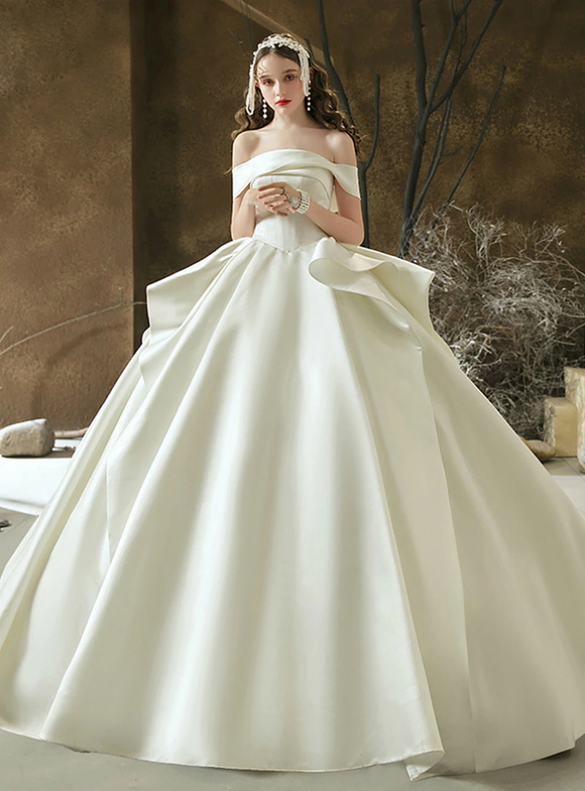
Sculptural satin, unexpected shoulder lines and a sweeping finish give this bridal gown its own distinctive character.

01 / The front silhouette

02 / The back construction
“A different line at every angle.”
A study in satin and proportion
Shoulder to waist
The neckline is defined by broad satin bands that travel across the upper bodice and extend towards the arms. Their alternating direction gives the shoulder area an unusual, almost architectural rhythm. Visible seams shape the bodice with a corset-inspired outline, bringing definition to the waist without relying on heavy surface decoration.
Below the waist, structured pleats open into a generous ball gown skirt. The contrast between the fitted upper section and the expansive lower silhouette creates the formal proportions many brides look for in a traditional ceremony gown with a contemporary detail.
The finishing view
The open back
Ribbon ties at the back allow the bodice to be adjusted for a closer contour. The open-back design adds visual lightness to the gown, while the long train carries the full skirt into a graceful finish. From the entrance to the walk down the aisle, the back view has as much presence as the front.
Styling notes
Keep the neckline visible with a low-profile necklace or delicate earrings. A low bun or softly pinned hair complements the exposed back and keeps attention on the unusual shoulder bands. For footwear, consider the heel height you intend to wear throughout the day before finalising the hem length.
The gown is suited to a formal church ceremony, a grand venue or a classic hotel wedding. Its clean satin surface also gives bouquets, veils and jewellery room to make their own statement.
Explore the bridal edit
Full-skirt ball gown wedding dresses
Before the fitting
Bridal questions
How should I measure for the off-the-shoulder bodice?
Measure your bust, waist and upper body carefully, following the size guide. Keep your shoulders relaxed and measure around the fullest part of the bust without pulling the tape too tightly. The upper band placement makes accurate proportions especially important.
Can the ribbon-laced back accommodate small size adjustments?
The lace-up construction offers some flexibility when adjusting the bodice fit. It is not a substitute for selecting the correct size, so use your current measurements and allow a bridal seamstress to assess the final fit before the wedding.
Which bra works with an open-back wedding dress?
Traditional high-back bras may show above the open back. Low-back bridal support, sewn-in cups or discreet adhesive options may work, depending on your bust and preferred support. Test your chosen option during the fitting rather than waiting until the wedding week.
Can the train be bustled for the reception?
A bustle may be possible, but the best method depends on the train length, skirt weight and internal construction. Ask your seamstress to inspect the gown and recommend a secure bustle before making alterations.
What should I consider when altering the pleated skirt?
The hem should be assessed with your wedding shoes on. Alterations need to preserve the skirt's volume and the fall of its pleats, so avoid trimming the fabric before a bridal specialist has checked the intended finished length.
How should satin be stored before the wedding?
Store the gown in a breathable garment bag in a cool, dry place, away from direct sunlight and rough surfaces. Keep pressure off the pleats and avoid hanging the train where it can become creased or caught.